
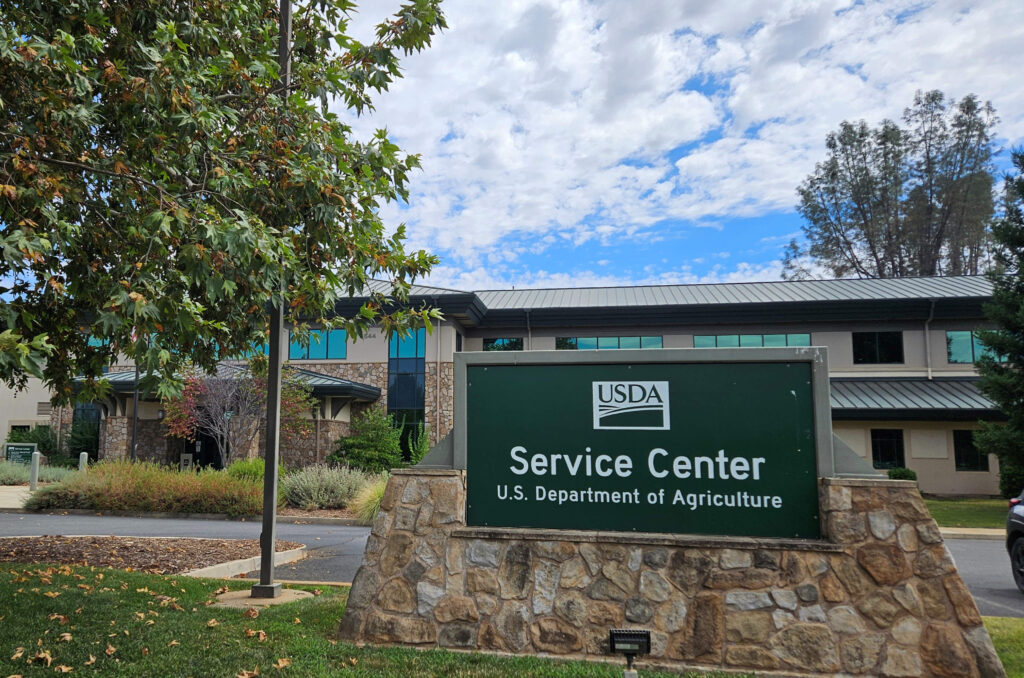
Inside a USDA Service Center
A visit to the USDA Service Center by an ARRA partner in Redding, California, highlights how the U.S. Forest Service and the U.S. Department of Agriculture have adapted their field operations to better serve rural communities, land managers, and public land users.
Located in what many longtime Northern California residents still recognize as the Shasta-Trinity National Forest Supervisor’s Office, the facility now serves a much broader purpose. In addition to housing the Shasta-Trinity National Forest headquarters, the building also hosts the Pacific Southwest Research Station, the Natural Resources Conservation Service (NRCS), the Farm Service Agency (FSA), Rural Development, and other USDA programs.
Rather than serving as the headquarters of a single National Forest, facilities such as the Redding Service Center operate as integrated USDA campuses where multiple agencies work together. The model emphasizes coordinated service delivery and provides a central location for landowners, agricultural producers, conservation partners, researchers, local governments, and recreation organizations to access USDA programs and expertise.
The approach reflects broader changes in public land management. Many of today’s resource management challenges—including watershed restoration, hazardous fuels reduction, wildlife habitat improvement, grazing management, wildfire recovery, and recreation planning—are addressed through partnerships that include multiple federal agencies as well as states, tribes, counties, Resource Conservation Districts, Fire Safe Councils, private industry, nonprofit organizations, and local communities.
For partner organizations and local governments, the presence of multiple USDA agencies in a single facility can streamline project coordination and reduce administrative complexity. Members of the public seeking information on conservation programs, grazing permits, forest management, recreation opportunities, or post-fire recovery may also benefit from having several USDA offices in one place.
The transition to integrated Service Centers also marks a clear departure from the traditional Forest Service Supervisor’s Office. Historically, these offices often reflected the identity of the National Forest they served, featuring large forest maps, interpretive exhibits, historic photographs, timber displays, visitor information, and other materials that connected visitors to the surrounding landscape.
As USDA Service Centers continue to evolve, they also serve as key public points of contact for the National Forest System. Outdoor recreation—including hiking, camping, hunting, fishing, horseback riding, mountain biking, and off-highway vehicle recreation—has become one of the largest and fastest-growing uses of national forests. As a result, Service Centers increasingly provide information and resources that support recreation alongside their broader administrative and conservation missions.
Visitor maps, Motor Vehicle Use Maps (MVUMs), permit information, interpretive displays, stewardship opportunities, and educational exhibits help connect the public to nearby National Forests and support safe, responsible recreation.
The evolution of USDA Service Centers reflects a broader shift toward integrated service delivery and collaborative land management. Although the organizational structure has changed, these facilities continue to serve as gateways to National Forests and as centers that serve surrounding communities and the diverse users of America’s public lands.
Call for Presentations Open: 2027 International Trails Summit — ARRA Members Invited!
ARRA members with expertise in OHV, snowmobile, or motorized trail access are encouraged to submit a presentation proposal for the 2027 International Trails Summit, April 13-15 in Durham, North Carolina. This is a valuable opportunity to bring the motorized recreation perspective to a broader audience of trail professionals. Share what you’ve learned about sustainable OHV trail design, managing multi-use access, navigating land management partnerships, or advancing motorized recreation through technology and advocacy. Submissions are due September 15.
The Summit brings together roughly 900 professionals from land management agencies, nonprofits, trail builders, and outdoor recreation organizations for days of educational sessions, technical training, and field experiences, making it a key venue for ensuring that motorized recreation is well represented in conversations shaping the future of trail policy and management. If you have a project, partnership, or lesson learned that could help other professionals better understand and support OHV and motorized access, we encourage you to submit a proposal. Click here to view the full Call for Presentations details.
Outdoor Recreation Community Celebrates the First Anniversary of the Public Lands Caucus
On July 21, the Motorcycle Industry Council, Recreational Off-Highway Association, and Specialty Vehicle Institute of America joined outdoor recreation industry leaders and partners to celebrate the first anniversary of the bipartisan Public Lands Caucus. The event was hosted by the Outdoor Recreation Roundtable, and House members from both parties highlighted the caucus’s efforts over the past year to oppose proposals to sell millions of acres of federal public lands through budget reconciliation and tax legislation while reaffirming their commitment to protecting public access and conserving America’s public lands.
Launched in May 2025 by Representatives Ryan Zinke and Gabe Vasquez, the Public Lands Caucus has 23 members. It is a bipartisan coalition dedicated to conserving public lands, expanding outdoor access, protecting recreational opportunities, and preventing the sale of federal lands. At the anniversary event, Representative Susie Lee praised the caucus’s bipartisan leadership and its work to better inform the public about America’s public lands.
“Public lands provide riding opportunities for millions of Americans, and protecting responsible access is important to the future of powersports,” said Mario Mairena, Senior Manager of Federal Affairs for the Motorcycle Industry Council. “It was a pleasure to join lawmakers from both parties at the celebration to recognize the value of public lands and the role they play in outdoor recreation.”
According to the Department of the Interior’s first unified interagency recreation visitation report, released as directed by the EXPLORE Act, federal agencies recorded approximately 947.5 million recreation visits in fiscal year 2024, including nearly 23 million off-highway vehicle visits on Bureau of Land Management lands.