
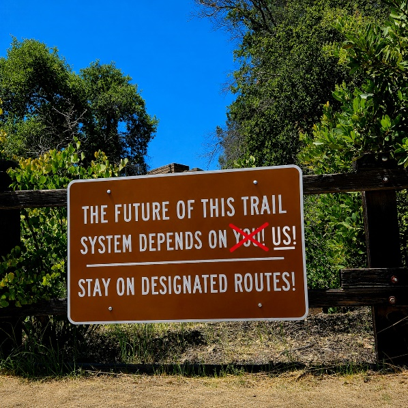
The Future of This Trail System Depends on Us
As the 2026 wildfire season ramps up across California and much of the West, Don Amador recently returned to the Mendocino National Forest to assess natural resources and recreation infrastructure affected by the 2018 Ranch Fire. For many in the OHV and powersports community who have spent decades riding, working, volunteering, racing, camping, and recreating on public lands, such visits are both inspiring and sobering.
These landscapes still hold tremendous beauty, resilience, and opportunity. Agency employees, volunteers, collaborative groups, local communities, and recreation partners continue to work tirelessly to reopen trails, restore campgrounds, stabilize roads, reduce fuels, and recover watersheds damaged by repeated megafires. But after nearly a decade of increasingly severe fire seasons and the emergence of “gigafire” conditions across the West, the cumulative impacts on recreation infrastructure and public land access are becoming impossible to ignore.
While portions of the Mendocino trail system and several recreation sites have been restored through years of hard work and partnership investment, many trails remain difficult to access or are functionally closed because of fire damage, erosion, fallen timber, brush encroachment, and washed-out roads. Scenic ridgelines once covered by dense conifer forests now overlook large expanses of standing dead trees and severely altered landscapes. Historic trail corridors once maintained through regular agency operations now require extensive restoration just to remain passable.
For the powersports industry and OHV community, these changes have significant long-term implications. Public land access is the foundation of our recreation culture, riding traditions, tourism economies, organized events, and future ridership growth. Without sustainable trail systems, resilient infrastructure, and healthy working relationships with land managers, the future of motorized recreation itself becomes increasingly vulnerable.
Yet the broader story extends far beyond any single forest or fire. Across the West, the U.S. Forest Service and its partners are confronting a new operational reality in which wildfire impacts are no longer isolated emergencies but long-term institutional challenges that affect workforce capacity, recreation management, infrastructure recovery, and landscape resilience.
Recent agency discussions increasingly acknowledge that the cumulative impacts of extended fire seasons, repeated large incidents, staffing shortages, and deferred maintenance are placing unprecedented strain on land managers’ ability to keep pace with restoration needs. Firefighters, recreation staff, engineers, trail crews, biologists, and line officers are being asked to respond to emergencies while also restoring landscapes at scales never before seen in modern forest management.
At the same time, suppression demands continue to consume significant operational bandwidth, even as Congress has increased investments in fuel reduction and restoration. The result is an ongoing balancing act in which agencies must prioritize community protection, watershed recovery, hazard mitigation, and critical infrastructure while maintaining recreation access across millions of acres of public land.
Toward the end of the field visit, Amador stopped at the Wolf Creek OHV Information Center, where a long-standing trail management sign reads: “THE FUTURE OF THIS TRAIL SYSTEM DEPENDS ON YOU! — STAY ON DESIGNATED ROUTES!”
He reflected on his long history with the Mendocino National Forest — from his first rides there in the 1970s and family OHV campouts to enduros, promoting sound-compliant exhaust systems and spark arrestors, volunteering on post-fire recovery projects after the 2002 Trough Fire, and later involvement in the FireScape Mendocino collaborative and co-founding the Post-Wildfire OHV Recovery Alliance following the Ranch Fire and August Complex.
The future of trail systems and public lands no longer depends solely on agency staff or land managers, nor does it rest entirely on volunteers and local riding clubs. Increasingly, the future of sustainable OHV recreation depends on broad collaboration among riders, manufacturers, aftermarket companies, dealerships, event promoters, land managers, stewardship organizations, counties, tribes, local businesses, and elected officials.
The reality is that no single agency or organization has the staffing, funding, or institutional capacity to fully recover every fire-impacted landscape at the pace and scale now required across the West. That is not a reflection of a lack of commitment. It reflects the immense complexity and magnitude of the challenge itself.
Despite those challenges, there is still reason for optimism. Over the past decade, OHV organizations, stewardship groups, local clubs, industry partners, counties, and volunteers have increasingly stepped forward to help fill critical gaps in trail maintenance, post-fire recovery, education, sustainable recreation management, and collaborative planning. These partnerships are no longer supplemental to the mission — they are becoming essential to it.
The powersports industry has long promoted responsible recreation through ethics campaigns, sound compliance efforts, youth education, safety training, volunteerism, and stewardship partnerships. The industry also invests in on-the-ground efforts through its Right Rider Access Fund (RRAF) grant program, which will provide nearly $600,000 in 2026 to support trail maintenance and recovery and the safe, responsible use of OHVs. Moving forward, these efforts will become even more important as agencies increasingly rely on partnerships and collaborative capacity to sustain recreation opportunities in fire-impacted forests.
Protecting that future will require more than simply enjoying access to public lands. It will require continued stewardship, collaboration, investment, advocacy, volunteerism and a shared commitment from everyone who values the freedom and opportunity these landscapes provide.
The CRT Announces the 2026 Tom Petri Recreational Trails Program Achievement Award Winners
The Coalition for Recreational Trails (CRT) has revealed the 10 outstanding trail projects chosen as recipients of the 2026 Tom Petri Recreational Trails Program (RTP) Annual Achievement Awards. Named in honor of former U.S. Rep. Tom Petri of Wisconsin, these awards celebrate exemplary use of RTP funding to enhance trail experiences across the United States. This year marks a milestone – the 35th anniversary of the RTP. Since its inception, the program has supported nearly 35,000 successful trail initiatives nationwide, benefiting a wide range of trail users. Managed by the Federal Highway Administration, the RTP stands as a testament to the strength of collaboration among federal agencies, state trail programs, local governments, and dedicated trail advocates.
The 10 award-winning projects will be formally recognized at a ceremony in Washington, D.C., on June 25. The event will bring together project leaders, trail supporters, and members of Congress to honor these achievements.
2026 Award Recipients and Categories:
-
- Ojibwe Trail Rehab Initiative (Wisconsin): Maintenance and Rehabilitation
-
- Bean Peaks Gravity Flow Trails (Arizona): Construction and Design
-
- Heavy Maintenance Crew Statewide (Washington): Maintenance and Rehabilitation
-
- Oak Creek School Cross Country Trail System (Arizona): Public-Private Partnership
-
- Mount Hough Phase Two (California): Community Linkage
-
- Sustainable Trail Design and Layout, Construction, and Maintenance Training (North Carolina):
Education and Communication
- Sustainable Trail Design and Layout, Construction, and Maintenance Training (North Carolina):
-
- Anthracite Outdoor Adventure Area Box Culvert (Pennsylvania): Multiple-Use Management and Corridor Sharing
-
- Sky Chief Park Trail Bridge Linkage Project (North Dakota): Accessibility Enhancement
-
- 2025 Pennsylvania Greenways & Trails Summit: Capital Connections to Greener Pathways
(Pennsylvania): Engaging Public-Sector Partners
- 2025 Pennsylvania Greenways & Trails Summit: Capital Connections to Greener Pathways
-
- Statewide Heavy Trail Restoration (Oregon): Enhancement of Federal Lands
These projects exemplify the positive impact of RTP funding and the importance of public-private partnerships in building and maintaining America’s trail systems.
Iowa Becomes the 25th State to Create an Office of Outdoor Recreation
On June 8, Iowa Gov. Kim Reynolds announced the Iowa Office of Outdoor Recreation, the 25th state office of outdoor recreation nationwide. The new office will be housed within the Iowa Economic Development Authority and marks another major milestone in the rapidly growing bipartisan movement to recognize outdoor recreation as a powerful economic engine for states and communities across America. The announcement was made at Lake Ahquabi State Park outside Des Moines, with Gov. Reynolds joined by Chris Perkins, vice president of Programs at the Outdoor Recreation Roundtable; Iowa EDA Director Debi Durham; Winnebago Industries Vice President of Government and Industry Relations Chad Reece; and other state leaders and partners.
“Outdoor recreation contributes nearly $6 billion annually to Iowa’s economy and supports nearly 50,000 jobs across the state, and opportunity exists for further growth,” said Reynolds. “By fostering relationships among public agencies, private businesses, and community partners, we can promote and expand what Iowa has to offer for outdoor enthusiasts, families, and visitors, elevating our state’s image as an outdoor recreation destination.”
The Iowa Office of Outdoor Recreation will serve as a coordinating hub for outdoor recreation efforts across the state and is expected to focus on:
-
- Convening organizations, local governments, and business stakeholders to develop shared plans and promote outdoor recreation as a pillar of tourism marketing.
-
- Creating a centralized structure for public and private stakeholders who actively invest in outdoor recreation to work together, expanding strategic partnerships, and promoting cohesive growth.
-
- The clear and ongoing need for the state of Iowa to support, enhance, and expand its outdoor recreation sector while ensuring the responsible stewardship of its natural landscapes for future generations.